
📋 Table of Contents
- 1. Why 2026 Is the Year Bidets Went Mainstream in Toronto
- 2. What Toronto's 2026 Bathroom Renovation Trend Actually Looks Like
- 3. Three Reasons GTA Homeowners Are Adding Bidets During Renovation
- 4. What Bidet Installation Involves During a Renovation
- 5. Bidet Features Worth Prioritizing
- 6. Frequently Asked Questions
Why 2026 Is the Year Bidets Went Mainstream in Toronto
A few years ago, a bidet in a Toronto home was unusual enough to warrant a comment. Today, renovation contractors across the GTA are reporting that bidets — particularly integrated toilet-bidet seats and smart toilet systems — are among the most requested upgrades when homeowners plan a bathroom renovation.
The shift is being driven by a combination of factors: growing hygiene awareness, rising toilet paper costs, a broader move toward "wellness bathrooms" in Toronto's renovation culture, and the influence of travellers and immigrants who are already accustomed to bidets from living in Japan, South Korea, and parts of Europe.
💡 By the Numbers
The global bidet market was valued at $7.2 billion USD in 2025 and is projected to nearly double by 2034, growing at a CAGR of 7.4%. In Canada specifically, the bidet market is forecast to grow at 5.94% annually through 2035, driven by hygiene awareness and sustainability trends. In Toronto, smart toilets and bidet seats now appear on the fixture lists of renovation projects across a wide price range — from mid-range full-bathroom renos to luxury ensuite remodels.
If you're planning a bathroom renovation in Toronto in 2026 and wondering whether a bidet makes sense for your project, this guide covers the renovation context, the practical reasons homeowners are choosing them, and what installation actually involves.
What Toronto's 2026 Bathroom Renovation Trend Actually Looks Like
Toronto bathroom renovations in 2026 are being shaped by a clear shift in priorities. According to local renovation professionals, homeowners are moving away from purely aesthetic upgrades and toward what one design firm calls "livable bathrooms" — spaces that are genuinely comfortable and functional every single morning, not just impressive in photos.
This means heated floors, layered lighting, storage-forward vanities, frameless glass showers — and increasingly, smart toilet and bidet fixtures that prioritize comfort and hygiene over simple utility. The "wellness bathroom" is no longer a luxury-only concept; it's showing up in standard full-bathroom renovations across North York, Scarborough, Mississauga, and downtown Toronto condos.
Bidet toilet seats occupy an interesting position in this context: they are a relatively affordable upgrade within a renovation budget, they require no major layout changes, and they visibly signal the kind of considered, hygienic bathroom design that resonates with both homeowners and buyers. In Toronto's competitive real estate environment, that combination matters.
⚠️ The Best Time to Install Is During the Renovation
A bidet toilet seat can technically be added to most existing toilets without a full renovation. However, doing it during a reno has a clear advantage: the electrical rough-in and plumbing connections can be planned from the start, avoiding the need to add an outlet near the toilet after the fact. In many Toronto homes and condos, there is no electrical outlet near the toilet — adding one after drywall is closed and tiled is significantly more disruptive and costly than including it in the original renovation scope.
Three Reasons GTA Homeowners Are Adding Bidets During Renovation
1. Hygiene — Water Cleans More Thoroughly Than Paper
The most straightforward reason is hygiene. Water provides a more thorough clean than toilet paper alone, which is why bidets have been standard in Japanese and South Korean households for decades. Post-pandemic hygiene awareness accelerated this shift in North America, and Toronto's multicultural population — with a significant proportion of residents already familiar with bidet culture from their home countries — has been an early adopter relative to other Canadian cities.
For households with older family members, individuals with certain health conditions, or parents of young children, the cleanliness advantage is often the deciding factor.
2. Toilet Paper Reduction
Canadians use approximately 10.2 kg of toilet paper per person per year — among the highest consumption rates in the world. At current prices, toilet paper represents a meaningful ongoing household expense, particularly for larger families. Smart bidet systems can substantially reduce reliance on toilet paper for primary cleaning (most users still use a small amount to dry, or use the built-in air dryer on higher-end models). Over time, the reduction in toilet paper spending contributes to offsetting the upfront cost of the unit.
The environmental angle also resonates with many GTA homeowners. Toilet paper production is water and resource intensive — reducing consumption aligns with broader sustainability goals that are increasingly shaping purchasing decisions in Toronto's renovation market.
3. Comfort Features That Change Daily Bathroom Experience
The practical difference between a basic toilet and a quality bidet seat is significant. Heated seats eliminate the shock of a cold toilet in a January Toronto morning. Adjustable water temperature and pressure allow personalization. Warm air drying means less reliance on paper. Auto-open and auto-close lids add a small but tangible quality-of-life improvement that most users quickly come to appreciate.
These are not luxury indulgences for most people who try them — they become the new standard of normal. That's why the bidet-to-toilet ratio in Japanese homes approaches 80%, and why Canadian adoption has been accelerating year over year since 2020.
💡 Who Benefits Most
Bidet seats are particularly valued in households with elderly family members or guests, individuals recovering from surgery or managing certain health conditions, families with young children transitioning from diapers, and anyone who has already used a bidet while travelling in Asia or Europe and wants to replicate that experience at home.
What Bidet Installation Involves During a Renovation
Electrical Requirement
Electric bidet seats require a grounded electrical outlet (typically 120V in Canada) within reach of the toilet — ideally on the wall behind or beside it. This is the main installation consideration. In most Toronto homes, there is no outlet in that location by default. During a bathroom renovation, running a new circuit to the toilet area is straightforward and can be done as part of the electrical rough-in phase. Added after the fact, it means opening walls or running exposed conduit, which is more disruptive.
Plumbing Connection
Most bidet toilet seats connect to the existing water supply line behind the toilet using a T-valve adapter — no new plumbing is required in most cases. The connection is a standard part of bidet seat installation and does not require relocating pipes or opening walls (unless the water supply is in an unusual position). This makes the bidet seat itself relatively simple to install once the electrical outlet is in place.
Toilet Compatibility
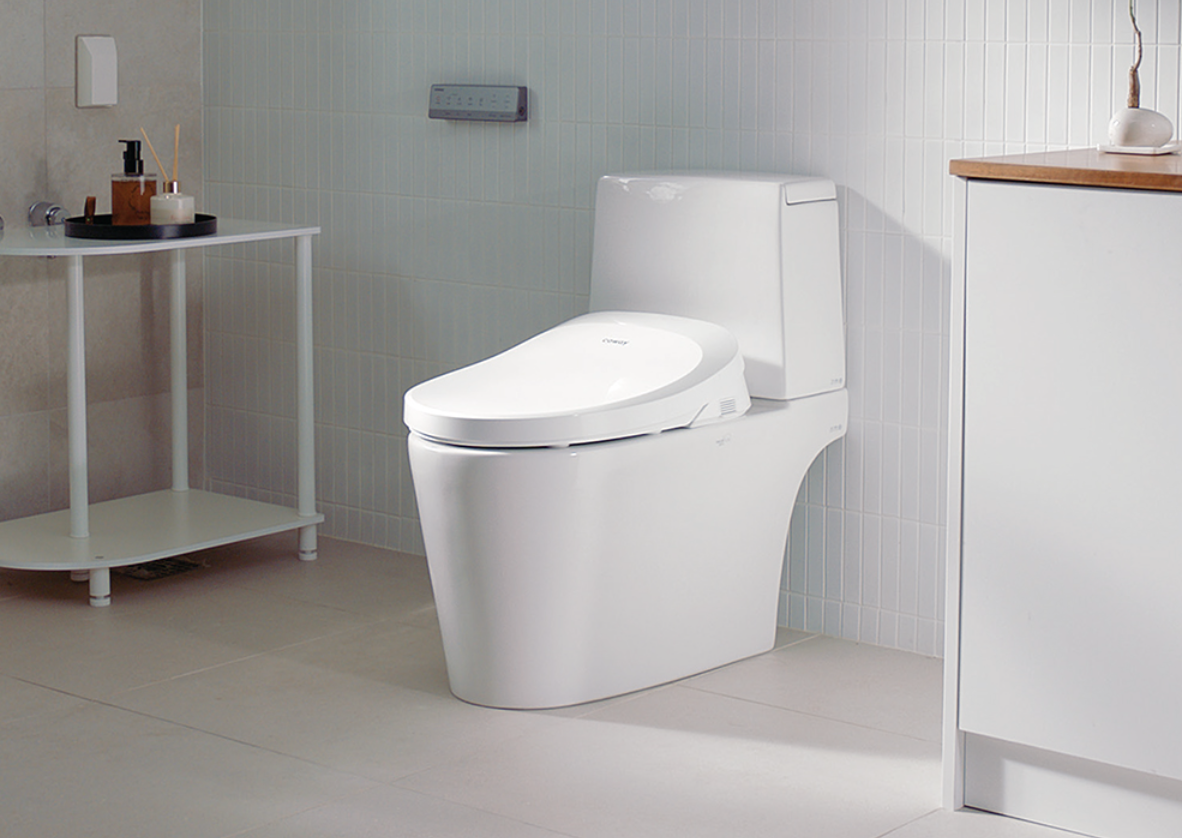
Bidet seats are designed to fit standard elongated or round toilet bowls. During a renovation, if you're replacing the toilet entirely, choosing a toilet that is confirmed compatible with your chosen bidet seat simplifies the process. Some manufacturers offer integrated toilet-bidet units (a single combined fixture) that eliminate compatibility questions altogether and create a cleaner visual aesthetic — these are the "smart toilet" category appearing more frequently in GTA renovations.
💡 Condo Renovation Note
Toronto condo renovations involve board approval and restrictions on working hours and trades. Adding a bidet seat itself typically does not require separate condo board approval beyond the general renovation permit. However, adding a new electrical circuit — which is the key requirement — falls under the electrical work component of your renovation permit. Confirm with your contractor and condo board during the planning phase to avoid delays.
Bidet Features Worth Prioritizing
Not all bidet seats are the same. For a Toronto renovation, where the goal is a bathroom that works well for years, these are the features worth looking for:
- ✅ Heated seat — essential for Canadian winters; adjustable temperature settings are preferable to a single fixed level
- ✅ Adjustable water temperature and pressure — allows personalization for different household members
- ✅ Self-cleaning nozzle — automatically rinses before and after use; important for ongoing hygiene with minimal maintenance
- ✅ Warm air dryer — reduces (though for most users does not eliminate) toilet paper use
- ✅ Soft-close lid — a small detail that reduces noise and wear; more important than it sounds in daily use
- ✅ Simple controls — either a side panel or wireless remote; avoid systems requiring a smartphone app for basic functions
- ✅ Energy-saving mode — bidets that run the seat heater continuously can add modestly to electricity use; look for units that use occupancy sensing or scheduled heating
Coway bidet systems are designed with daily household use as the priority — durable components, intuitive controls, and consistent performance rather than a long list of novelty features that rarely get used. For a Toronto home renovation where the bathroom will be used by the whole household for many years, reliability and ease of use matter more than the maximum possible spec.
Upgrade Your Bathroom Hygiene Today
Planning a Toronto bathroom renovation in 2026? Coway bidet systems are designed for real daily household use — heated seat, adjustable wash settings, self-cleaning nozzle, and straightforward installation that works with your renovation scope.
Discover Coway Bidet Systems →Free consultation • Professional setup support • 📞 +1 416-873-4984 • 한국어 상담 가능
Frequently Asked Questions
No — a bidet toilet seat can be retrofitted onto most existing toilets without a renovation. The main requirement is a grounded electrical outlet near the toilet. If your bathroom already has one (or you can add one without opening walls), installation is straightforward. However, if you're planning a renovation anyway, including the bidet and its electrical requirements in the renovation scope is significantly more efficient and cost-effective than adding it later.
The bidet seat unit itself typically starts at around $2,500 CAD for an electric model with full features (heated seat, adjustable wash, air dryer) in the Toronto market, with higher-end integrated smart toilet systems going considerably higher. Within a renovation, the main added cost is the electrical circuit to the toilet area if one doesn't already exist — a relatively minor line item in a full renovation budget. The plumbing connection for the bidet itself is simple and does not require rerouting any pipes.
Most bidet seats are designed to fit standard elongated or round toilet bowls, which covers the vast majority of toilets found in Toronto homes. If you're replacing your toilet as part of the renovation, choosing a toilet that is explicitly confirmed compatible with your chosen bidet seat model (or opting for an integrated smart toilet unit) removes any compatibility uncertainty. Your Coway consultant can help identify the right combination for your specific bathroom configuration.
Yes — bidet users typically reduce their toilet paper consumption substantially, since water handles the primary cleaning function. Models with a warm air dryer allow some users to eliminate paper almost entirely for drying as well, though many people prefer to use a small amount. The degree of reduction depends on the individual. For a household of four or more people, the ongoing savings in toilet paper are meaningful over time, particularly given current Canadian consumer goods prices.
Bidet seats and smart toilet systems are increasingly viewed as desirable features in Toronto's real estate market, particularly among buyers who have lived in Japan, South Korea, or Europe and consider them standard. A well-executed bathroom renovation that includes a quality bidet seat alongside modern tile, fixtures, and finishes contributes positively to the overall impression of the space. Whether it directly recovers its cost at resale depends on the broader renovation quality and the market at the time — but it is unlikely to be seen as a negative by buyers, and increasingly registers as a positive differentiator.