
📋 Table of Contents
Why Toronto Springs Hit Allergy Sufferers Hard
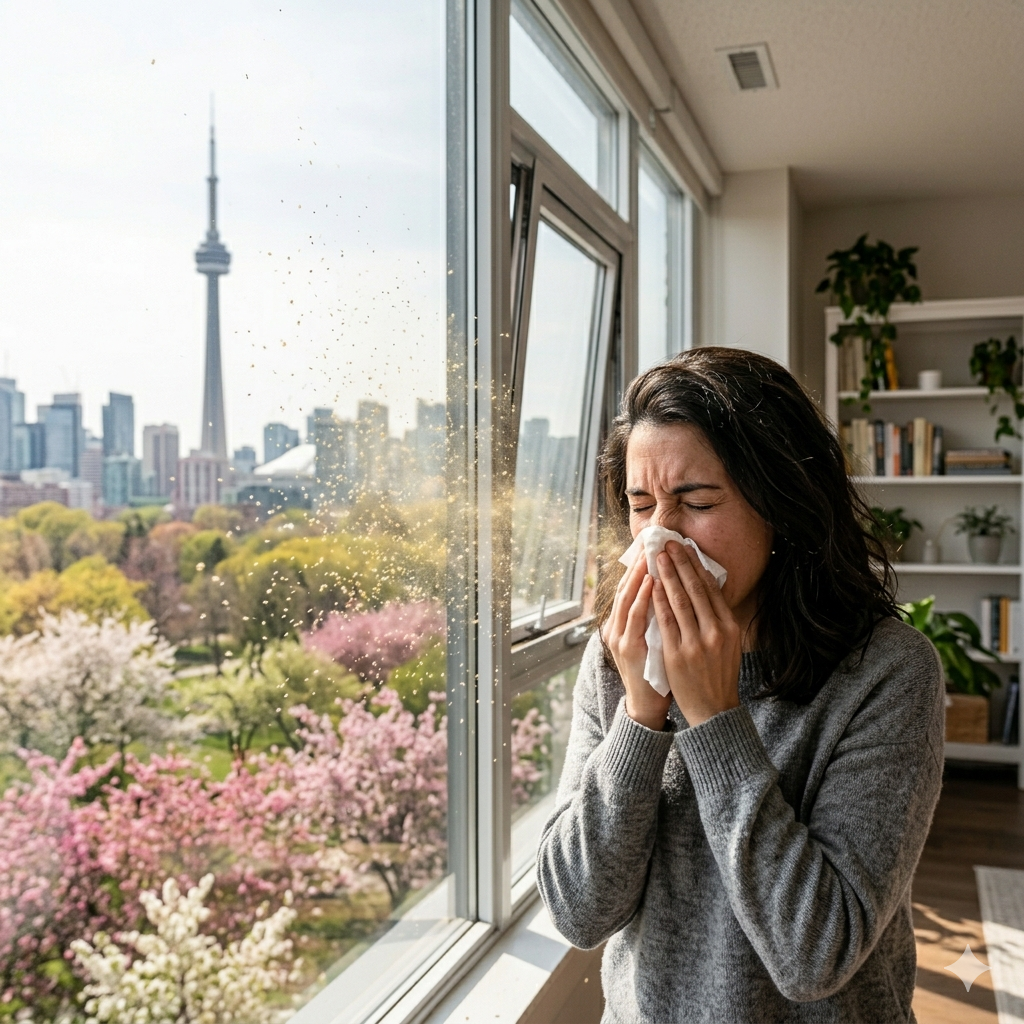
Every April and May, millions of Toronto residents notice the same thing: itchy eyes, a runny nose, sneezing that won't stop — and the feeling that it gets a little worse every year. You're not imagining it.
Toronto's spring pollen season is genuinely intense, and according to researchers and allergy specialists, it is getting longer. A combination of factors makes the GTA one of the most challenging places in Canada for seasonal allergy sufferers.
💡 Quick Facts
Between 20 and 30% of Canadians experience seasonal allergies, and Toronto residents face some of the country's highest pollen exposure levels. The GTA also holds the highest ragweed concentrations in Canada — though that's a fall concern. For now, in April and May, it's tree pollen — particularly birch and oak — that's the main culprit.
The reasons Toronto's allergy season has grown more difficult over time are well-documented: warmer winters are causing trees to release pollen earlier than in previous decades, urban trees under pollution stress tend to produce more pollen that is also more allergenic, and Toronto's concrete-heavy surfaces prevent pollen from settling into damp soil, allowing it to stay airborne and recirculate throughout the city.
Toronto's Pollen Calendar: What's in the Air Right Now
Understanding which plants are releasing pollen — and when — helps you plan your days and take appropriate precautions. Toronto's pollen season runs from late February through October, with distinct phases.
Spring (March – May): Tree Pollen Dominates
This is the peak period for tree pollen. Elm, cedar, and maple begin releasing pollen in March. By April and May — right now — birch and oak reach their peak, and these are among the most allergenic trees in the Toronto canopy. Late spring also sees overlap with early grass pollen, creating a particularly difficult period for allergy sufferers.
Summer (June – July): Grass Pollen Peaks
Kentucky bluegrass, ryegrass, and timothy grass peak from mid-May through mid-July. This overlaps with the tail end of tree pollen season, meaning the late-May to early-June window is often the hardest stretch of the year for people with multiple sensitivities.
Fall (August – October): Ragweed Season
The GTA records the highest ragweed pollen levels anywhere in Canada, peaking from mid-August through late September. For ragweed-sensitive residents, this is the most difficult period.
⚠️ Climate Change Is Extending the Season
The 2024 winter was the warmest on record in Toronto, causing trees to bloom and release pollen earlier than usual. Research shows year-over-year increases in total pollen grains per cubic metre of air in the GTA. For many allergy sufferers, the season now starts weeks earlier than it did a decade ago — and ends later too.
The Indoor Problem: Pollen Gets Inside Too
Many people assume that staying indoors is enough to avoid pollen. Unfortunately, it isn't — at least not without some additional precautions.
Pollen is microscopic and lightweight. During peak season, it enters your home through open windows and doors, through gaps around window frames and door seals, on your clothing and hair when you come indoors, and even through mechanical ventilation systems that don't have adequate filtration. Once inside, pollen can settle on furniture, bedding, and carpets — and be disturbed back into the air when you move around or vacuum without a HEPA filter.
The result is that even if you spend most of your time inside during peak pollen days, your indoor air can still carry a meaningful amount of airborne pollen — particularly in homes that are frequently opened up for ventilation, or in older buildings with less effective window and door sealing.
💡 Indoor Allergens Add Up
During spring, your home's air isn't just carrying pollen. Mould spores — which also peak in wet spring conditions — can be present alongside pollen, compounding symptoms for people who are sensitive to multiple allergens. Pet dander and dust mites, present year-round, add to the total allergen load indoors.
What a HEPA Air Purifier Can (and Can't) Do for Allergy Sufferers
Air purifiers with HEPA (High Efficiency Particulate Air) filters are frequently recommended by allergists and public health authorities as a tool to help reduce indoor allergen levels. It's worth being clear about what they genuinely help with — and what they don't.
What a HEPA Air Purifier Can Do
A true HEPA filter is certified to capture at least 99.97% of airborne particles 0.3 microns and larger. Pollen grains range from roughly 10 to 100 microns in diameter — well within the range that HEPA filters effectively capture. Running a HEPA air purifier in your bedroom and main living areas can meaningfully reduce the concentration of airborne pollen particles in those spaces. This is particularly helpful during sleep, when you spend many hours in one room.
Good HEPA purifiers also capture other common indoor allergens — dust mite particles, pet dander, and mould spores — which means the benefit extends beyond pollen alone during allergy season.
What a HEPA Air Purifier Cannot Do
It's important to be straightforward about the limits. An air purifier will not eliminate pollen from your home entirely — it can only filter the air that passes through it. It does not prevent pollen from entering through open windows, doors, or on your clothing. It is not a substitute for allergy medication or medical treatment, and it will not cure or prevent allergies. Its benefit is in reducing the amount of airborne allergen in a specific indoor space while it is running — nothing more.
⚠️ A Realistic Expectation
An air purifier can help make your indoor environment somewhat more comfortable during pollen season by reducing airborne particle counts in the rooms where it runs. For people with moderate to severe allergies, it works best as one part of a broader strategy — alongside keeping windows closed on high-pollen days, showering after being outdoors, and following medical advice from your allergist or family doctor.
What to Look for in a HEPA Air Purifier
- ✅ True HEPA certification — not "HEPA-type" or "HEPA-like," which are marketing terms with no certification behind them
- ✅ Appropriate room coverage (CADR rating) — the Clean Air Delivery Rate should match the size of the room where you plan to use it
- ✅ Carbon pre-filter — helps capture larger particles and odours before they reach the HEPA layer, extending filter life
- ✅ Low noise level — important for bedroom use; look for a quiet setting below 30–35 dB
- ✅ Filter replacement reminders — a clogged HEPA filter loses effectiveness quickly
Practical Tips to Reduce Indoor Pollen Exposure
Whether or not you use an air purifier, these habits make a real difference during peak pollen season in Toronto:
- Keep windows closed on high-pollen days — check pollen count forecasts each morning (IQAir, The Weather Network, and Klarify all offer Toronto-specific pollen data) and keep windows shut when counts are high
- Shower and change clothes when you come indoors — pollen clings to hair and clothing; leaving it on your body brings it directly into your bedroom and onto your pillow
- Avoid outdoor activity in early morning hours — pollen concentrations are typically highest between 5 AM and 10 AM on dry, sunny days
- Vacuum with a HEPA-filtered vacuum — standard vacuums can recirculate fine pollen particles back into the air; a HEPA vacuum captures them
- Wash bedding frequently — weekly washing in hot water removes pollen, dust mite particles, and other allergens that accumulate on pillowcases and sheets
- Run your air purifier consistently — particularly in the bedroom overnight and in rooms where you spend the most time during the day
💡 High-Pollen Days in Toronto
Pollen counts in Toronto tend to be highest on dry, warm, and windy days — especially when these follow a period of rain, which temporarily washes pollen out of the air and then releases it in bursts when conditions dry out again. Overcast and rainy days typically bring lower pollen counts and less severe symptoms.
Breathe Cleaner Air in Your Toronto Home This Pollen Season
Coway air purifiers use certified HEPA filtration to reduce airborne pollen, dust mite particles, and mould spores in your indoor spaces — a practical step toward more comfortable breathing during Toronto's spring allergy season.
Explore Air Purifiers for Toronto Homes →Free consultation • Professional setup support • 📞 +1 416-873-4984 • 한국어 상담 가능
Frequently Asked Questions
Toronto's pollen season runs roughly from late February through October, with distinct phases. Tree pollen peaks in April and May — birch and oak are the main culprits during this window. Grass pollen follows from mid-May through mid-July, and ragweed dominates from mid-August to late September. The very end of April and the month of May tend to be the most intense period for tree pollen allergies, particularly on warm, dry, and windy days.
A HEPA air purifier can reduce the concentration of airborne pollen particles in the room where it is running, which may help reduce indoor allergy symptoms. It's one useful tool among several. However, it doesn't eliminate pollen entirely or replace allergy medication, and it won't stop pollen from entering through open windows or on your clothing. The greatest benefit is usually seen in the bedroom, where running a purifier overnight can meaningfully reduce the allergen load during the hours when you are stationary and breathing the same air consistently.
Several factors make Toronto's pollen environment particularly intense. The city's large urban tree canopy produces substantial amounts of tree pollen each spring. Toronto's concrete and asphalt surfaces prevent pollen from settling into damp soil, allowing it to remain airborne and circulate throughout the city. Urban pollution stress also causes trees to produce more pollen that is more allergenic. And the GTA holds the highest ragweed concentrations in Canada during fall. If you moved to Toronto from a less urban or more northern location, the difference in pollen load can be noticeable.
On high-pollen days — warm, dry, and windy days from April through early June — keeping windows closed is generally recommended for allergy sufferers. Pollen counts are most reliable in the morning; check a local forecast before deciding. On cool, rainy, or overcast days, pollen counts tend to be lower and ventilating your home is less risky. If you use a HEPA air purifier, running it with windows closed is more effective than running it with windows open, since the purifier doesn't need to compete with a continuous flow of outdoor pollen entering the space.
For many people with seasonal allergies, running a HEPA air purifier in the bedroom is one of the more practical steps they can take to reduce indoor allergen exposure. Toronto's pollen season runs from roughly March through October — about eight months — so the benefit isn't limited to a narrow window. Year-round, the same purifier also captures dust mite particles, pet dander, and mould spores, which means it continues to be useful well after pollen season ends. Whether it justifies the cost depends on the severity of your symptoms and how much your current indoor environment contributes to them.