
📋 Table of Contents
Introduction: Why Torontonians Are Questioning Their Tap Water, And What Experts Say
Late at night, when you pour a glass of water from your Toronto tap, do you ever catch a faint whiff of chlorine? Or perhaps after a shower, you've wondered about the water's effect on your skin and hair? This seemingly simple question — "Is Toronto tap water safe to drink?" — is more than just curiosity; it's a pressing health concern. Searches for this exact phrase have surged by over 900% in recent months, reflecting growing public interest and anxiety about water quality in Canada's largest city.
The short answer? Yes, Toronto's tap water is generally safe to drink and meets Canadian drinking water quality standards. But as you'll discover in this comprehensive guide, "safe" and "optimal" aren't always the same thing.
💡 Quick Takeaway
Toronto's tap water is treated and regulated to meet safety standards, but aging infrastructure, chlorine treatment, and water hardness may concern health-conscious residents. Many Toronto families choose water purification systems for added peace of mind.
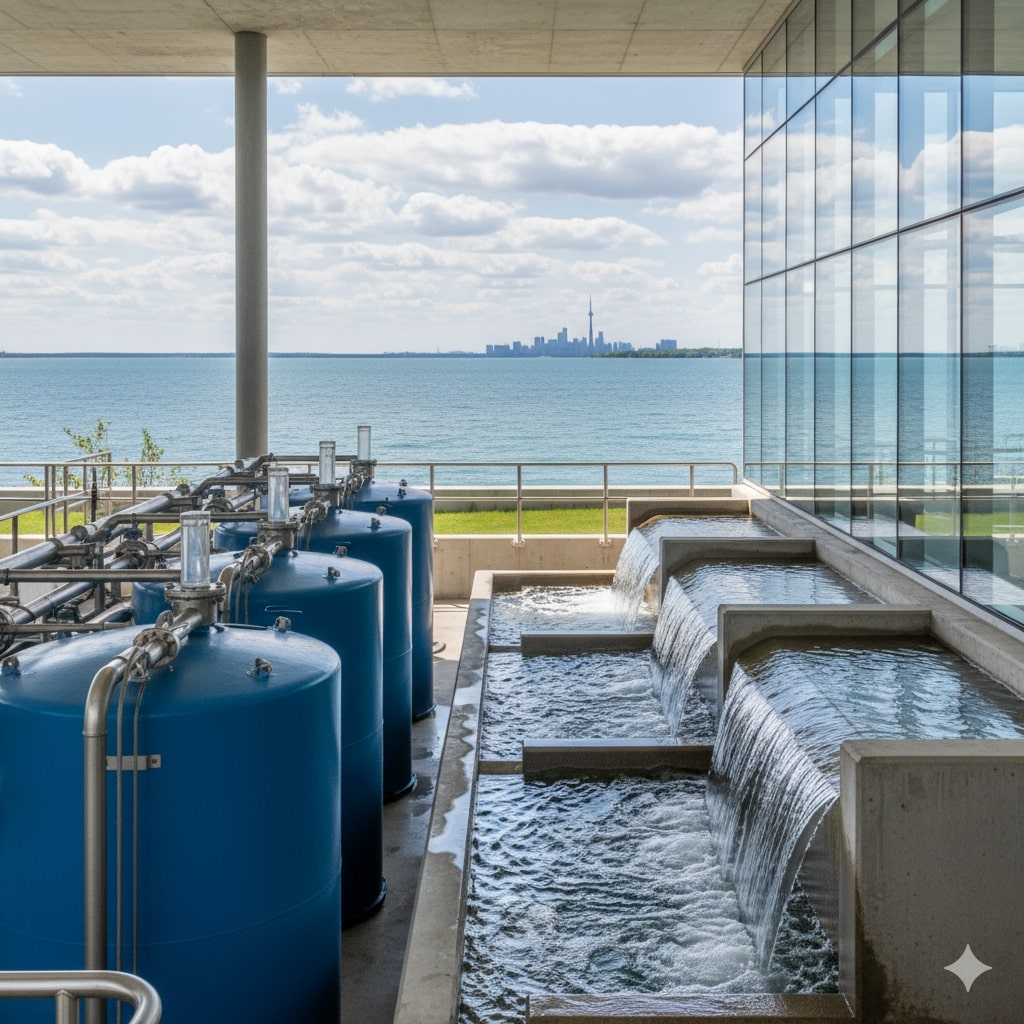
Toronto Tap Water Treatment: From Lake Ontario to Your Glass
Understanding where your water comes from helps explain both its quality and its limitations. Toronto draws its water from Lake Ontario, which then undergoes a multi-stage treatment process:
The Four-Stage Treatment Process
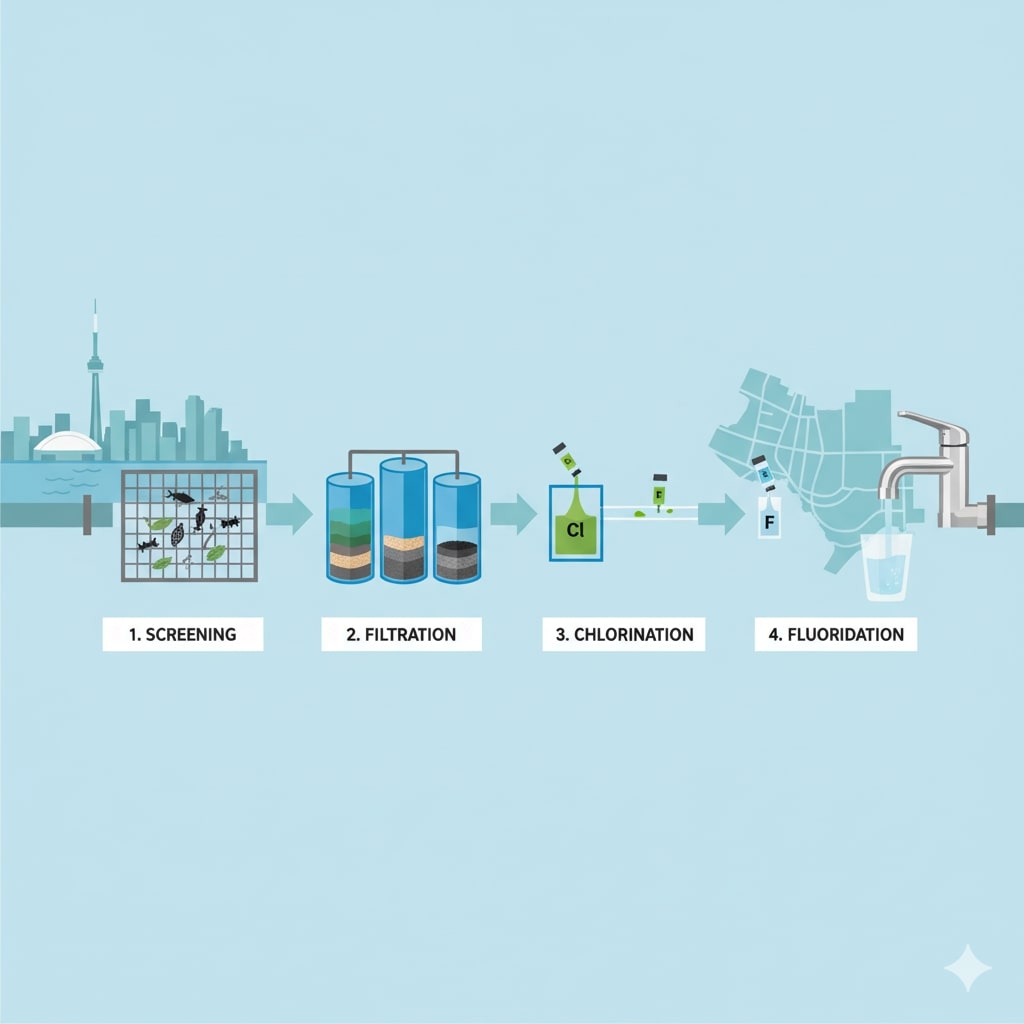
- Screening and Pre-Treatment: Large debris is filtered out, and aluminum sulfate is added to help particles clump together and settle
- Filtration: Water passes through sand and anthracite coal filters to remove smaller particles and microorganisms
- Chlorination: Chlorine is added as a disinfectant to kill bacteria and viruses (maintained at 0.25-1.5 mg/L)
- Fluoridation: Fluoride is added for dental health benefits (0.5-0.8 mg/L)
Meeting Canadian Water Safety Standards: What Does it Mean?
Toronto's water quality is regulated under the stringent Safe Drinking Water Act, 2002 (Ontario), which aligns with federal guidelines. The City of Toronto performs over 6,000 daily tests, ensuring that levels of microbiological and chemical contaminants remain well within the acceptable limits set by health authorities. These standards are some of the toughest in the world.
Specifically, the standards focus on:
- **Microbiological Safety:** Eliminating pathogens like E. coli and Giardia through rigorous chlorination.
- **Chemical Limits:** Setting maximum allowable concentrations (MACs) for substances like lead, mercury, and various pesticides.
- **Aesthetic Objectives:** Guidelines for taste, odor, and clarity, though these are secondary to safety.
Aging Infrastructure: Why Your Tap Water Might Pick Up **Lead Contaminants**
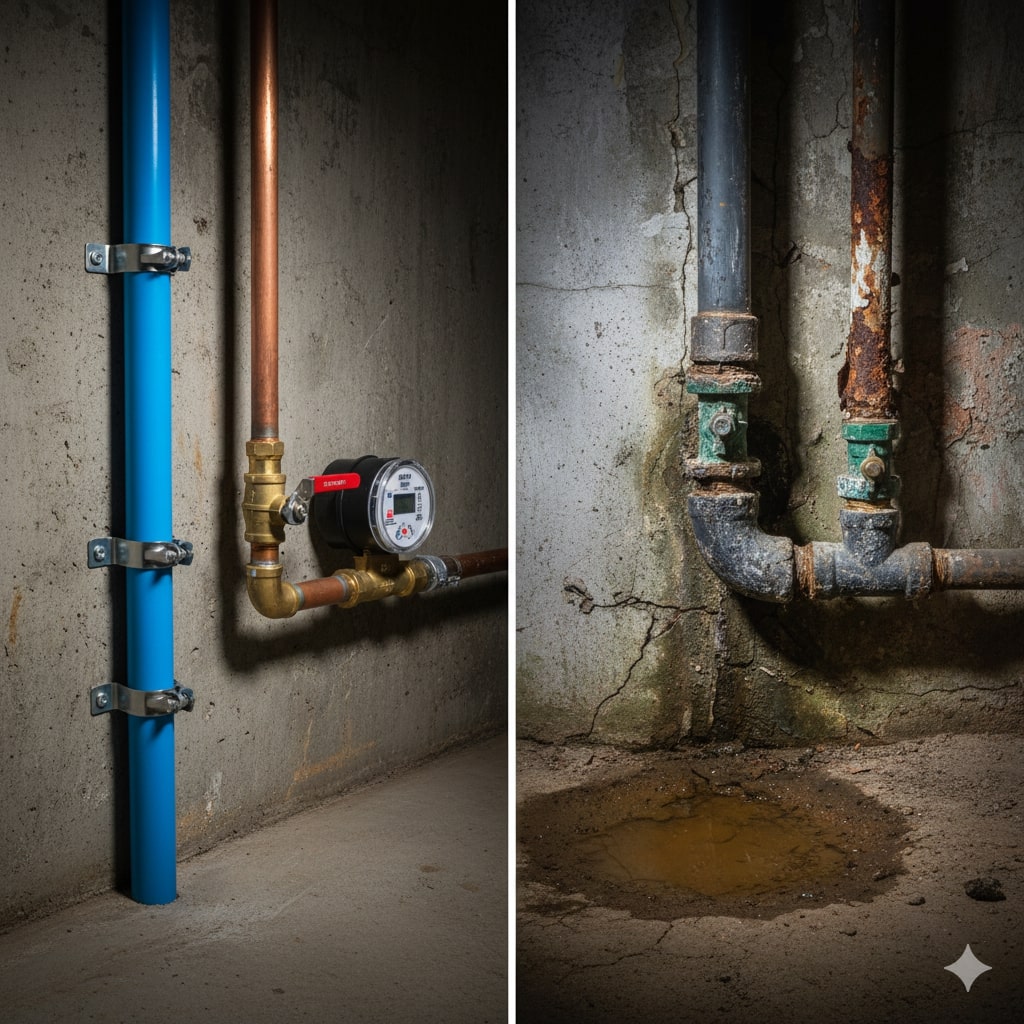
Here's where the story gets more complex. While Toronto's water treatment facilities are modern and effective, the city's water distribution system is aging—and that's where problems can occur.
⚠️ Important Consideration
Many Toronto buildings were constructed before 1960, when lead pipes and lead-based solder were commonly used in plumbing. Even though the water leaving treatment plants is pristine, it can pick up contaminants as it travels through old pipes to your tap.
Common Issues with Aging Pipes
- Lead Contamination: Older buildings may have lead service lines that can leach lead into drinking water
- Rust and Corrosion: Iron pipes can corrode over time, affecting water color and taste
- Sediment Buildup: Decades of mineral deposits can accumulate, reducing water quality
- Biofilm Formation: Despite chlorination, bacteria can form protective biofilms in pipes
Beyond Safety: WHO Guidelines and Optimal Water Quality
While Toronto proudly meets Canadian standards, it's insightful to compare it against the World Health Organization (WHO) guidelines, which often set global benchmarks for optimal water quality. The key difference lies between legally safe limits and ideal health recommendations.
🧐 Toronto vs. WHO: The Discrepancy
Toronto water is treated to be microbially safe, using chlorine. However, the WHO focuses on minimizing aesthetic issues and potential long-term risks. For instance, the residual chlorine level that keeps your water safe in the pipes (up to 1.5 mg/L in Toronto) can be perceived as an unpleasant taste, which the WHO considers an "aesthetic objective." Advanced filters are necessary to achieve this higher level of purity.
Furthermore, even legally compliant levels of substances like **Disinfection Byproducts (DBPs)**, formed when chlorine reacts with organic matter, can be a concern for health-conscious consumers. These are the trace contaminants that many premium water purification systems are designed to minimize.

The Bottom Line: Toronto Water is Safe, But Is It Optimal?
So, is Toronto tap water safe to drink? Yes—it meets all regulatory standards and is generally safe for consumption. Toronto's water treatment system is sophisticated and well-monitored.
However, "safe" doesn't necessarily mean "optimal." Several factors may lead you to consider water purification:
- You live in an older building (pre-1960) with potential lead pipes
- You're sensitive to chlorine taste or have respiratory concerns
- You want to reduce exposure to disinfection byproducts
- Hard water is affecting your appliances, skin, or hair
- You simply want the highest quality water for your family
Want the Cleanest Possible Water for Your Family?
Discover how advanced water purification systems can remove chlorine, reduce hardness, eliminate potential contaminants, and give you peace of mind.
Compare Water Purifiers for Toronto Homes →Free consultation • Professional installation • Toronto support
Frequently Asked Questions
Yes, Toronto tap water is safe to drink directly from the tap. It meets all Canadian drinking water quality standards. However, if you live in a building constructed before 1960, you may want to run the tap for 30 seconds before drinking to flush out any potential lead contamination.
Toronto uses chlorine to disinfect water and keep it safe as it travels through the distribution system. The chlorine taste is most noticeable when levels are higher, particularly during summer months or after heavy rainfall. A water purifier with activated carbon can easily remove the chlorine taste.
Lead can be a concern if you live in a building built before 1960. The City has been replacing lead service lines, but many older buildings still have them. You can request a free water testing kit from Toronto Public Health, or consider a water purifier certified to remove lead.